
According to a recent report published by Human Rights Watch, insurgent groups across Afghanistan have escalated the killing of civilians in Kabul, targeting women and religious minorities. In recent weeks, these attacks have killed at least five journalists or media workers, all women. Aside from targeting reporters, they have also killed around seven factory workers in the Hazara community, a minority group in the country.
The Afghan Journalists Safety Committee recently reported that 14 women working at different media outlets based in Afghanistan had been treated, violently attacked, or harassed in late 2020. Statistics have shown that women in journalism tend to leave their profession due to worsening security and fear of violence. This trend began to become clearer in 2015 and has since escalated exponentially.
The Islamic State of Khorasan Province, or ISKP, has publicly claimed responsibility for several of the recent attacks in the capital of Nangarhar province, Jalalabad city. ISKP is affiliated with the Islamic State, better known as ISIS. Since 2015, ISKP has posed a serious threat to the safety of civilians, launching a campaign of intimidation against the local population in that same year. In the following six years, this campaign has spread its influence to other cities and escalated the violent nature of its methods.
Insurgents have taken to accusing women of defying social norms by taking on public roles in media. Although the ISKP has claimed responsibility for specific attacks and is persistent with intimidation it is often unclear whether the Taliban or other groups are also involved to any extent.
Late 2020 saw a devastating case that caught the international community’s attention. On December 10, 2020, Malala Maiwand was killed along with her driver, Tahar Khan, after multiple gunmen publicly fired at her car near Jalalabad. Maiwand was the first woman TV presenter for Enikass News in Nangarhar province. The Nangarhar governor announced on December 28 that one suspect had been arrested, however since then no information has been released.
Earlier this month, on March 2nd, gunmen shot and killed three different women: Mursal Waheedi, Saadia Sadat, and Shahnaz Raufi. The three, like Malala Maiwand, worked at Enikass News dubbing foreign language pieces. An official from the Afghan government had initially said that one of the gunmen was in police custody, however it was later released that the same suspect had been arrested in an incident that took place before. Enikass News receives consistent threats regarding its news coverage.

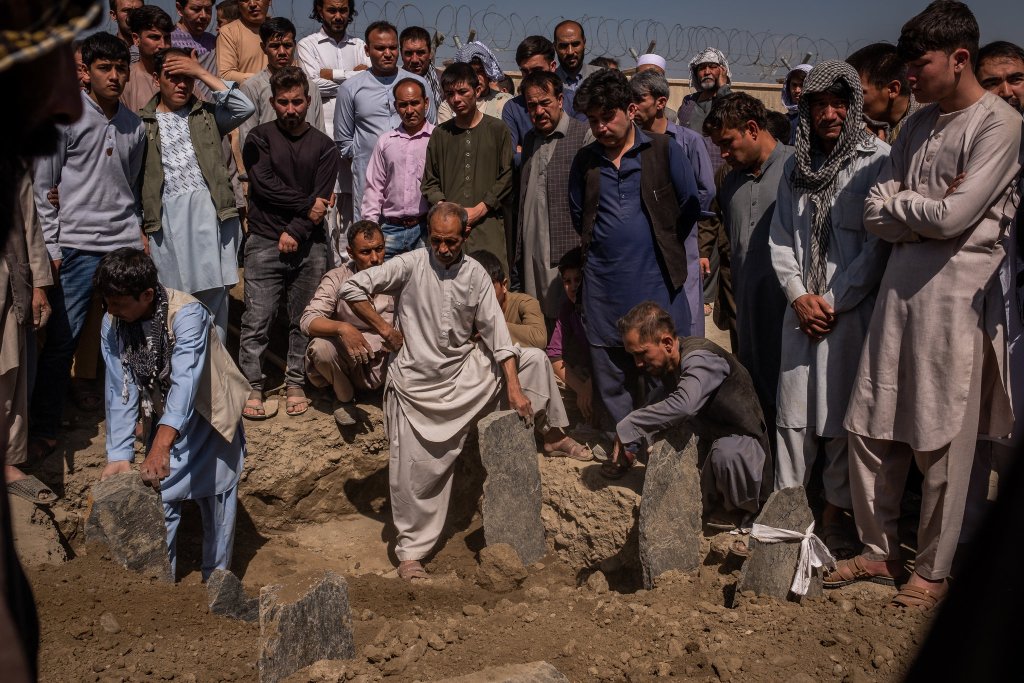
Women are not the only targets of these attacks, seeing as members of ethnic minority groups have also been threatened. On March 4, seven Shia Hazara workers were fatally shot in the Sorkh Rod district of Jalalabad in a plastics factory. When they were found, the men had their hands tied behind their backs. ISKP has claimed responsibility for several civilian attacks mainly in Shia neighborhoods, specifically Shia mosques in Kabul and other cities.
Taliban forces are also behind some of these past attacks on civilians, an example being the murder of Elyas Dayee, a journalist who was killed in an IED explosion in Helmand in November of last year. The Taliban threatened many journalists based in Afghanistan a few months after discussions between the Afghan government and the Taliban started.
Nusrat Parsa, a journalist in Afghanistan, told Human Rights Watch about the threats from armed groups he had been receiving following his reporting of subjects like sex trafficking and the LGBT community. He fled the country in January after these threats increased and he saw the inaction from the government following the killing of Yama Siawash in November 2020. While he is no longer in Afghanistan, area continues to receive death threats from armed group Hezb-i Islami.
Multiple attacks on journalists go unclaimed and the Afghan government often fails to investigate threats or attacks. Because of this, the climate of fear in Afghan media has been intensifying in past years. Armed groups are not the only organization that uses intimidation as a means of threatening journalists, criminal groups, militias backed by the government, and politicians have resorted to violence as well.
“A recent surge in targeted killings appears intended to drive women from public life and spread terror among minority communities. Unidentified attackers have also gone after journalists, civil society activists, and professionals, killing many, driving some from the country, and leaving the rest to live in fear.”
Patricia Gossman, associate Asia director of Human Rights Watch
Sources:
Afghanistan: Targeted killings of civilians Escalate. (2021, March 16). Retrieved March 21, 2021, from https://www.hrw.org/news/2021/03/16/afghanistan-targeted-killings-civilians-escalate
Salahuddin, S. (2021, March 02). Three female media workers shot dead in Afghanistan. Retrieved March 21, 2021, from https://www.arabnews.com/node/1818491/media
Taub, A. (2021, March 05). They were journalists, and women, and targeted for both. Retrieved March 21, 2021, from https://www.nytimes.com/2021/03/05/world/asia/afghanistan-women-journalists.html
 Help Humans