
In the past 45 years, tensions between Algeria and Morocco have lasted, but never really escalated. That is, until the conflict in Western Sahara became more relevant in terms of African geopolitics with the region attempting to be claimed by numerous countries, the most persistent of these being Algeria and Morocco. November of last year saw the Moroccan invasion of Guerguerat, helping fighting erupt between separatists in the region and the army. With Algeria also having unfinished business in the area, it is unlikely the conflict will de-escalate any time soon.
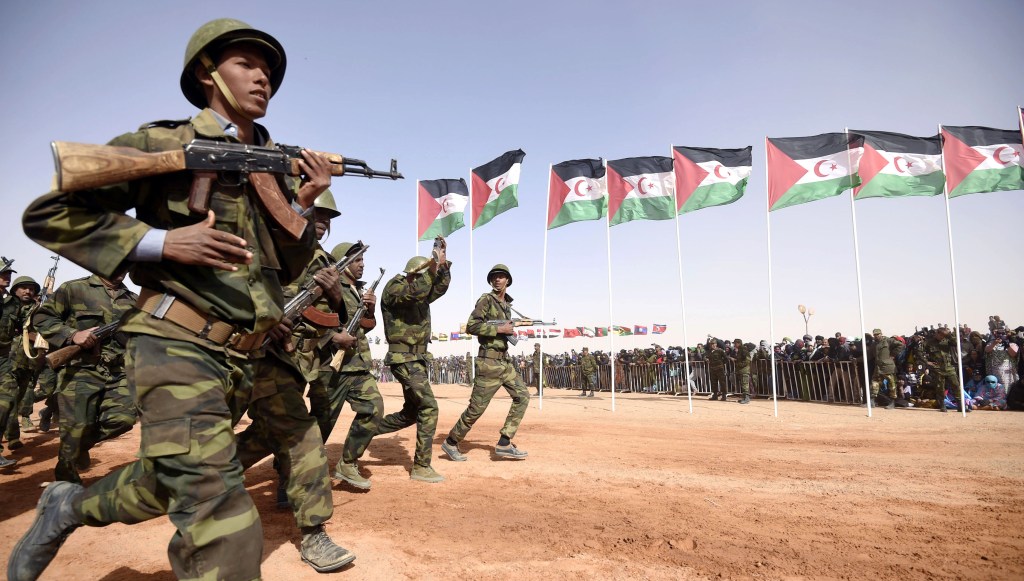
Algeria’s military ranks second in Africa while Morocco takes fifth place. Both countries regularly invest heavily into modernizing their weaponry and acquiring new equipment, turning to either American and French goods, or Russian-made artillery. According to the United States’ International Trade Administration, Morocco has purchased objects that stray from their usual defense machinery, including a Patriot air-defense system. While nothing has been confirmed surrounding the details of this purchase, it is suspected to have been orchestrated in order to put Morocco in a better position and close the remaining gap between Algeria and Morocco’s military systems.
The Western Sahara conflict has always been the main contributor to hostilities between both countries. In 1991, Morocco and the Algeria-backed Polisario Front agreed to a ceasefire, however, following certain actions in 2020, the conflict is escalating. To start with, Morocco previously launched a military operation within a buffer zone controlled by the UN, this zone being the aforementioned Guerguerat village. 60 peaceful protestors were forcibly removed by soldiers. In response, the Polisario Front declared an end to 1991’s ceasefire and went as far as to promise a full resumption of fighting.
The UN and the international community have repeatedly called for both sides to restrain their forces and opt for a more diplomatic settlement, therefore maintaining the previous ceasefire. In clear defiance, the Polisario Front announced on November 15th of last year that it was beginning to mobilize “thousands” of apparent “volunteers” to join their fighters.
Since November, both sides have reported shots being fired. Ex-president Donald Trump announced in December that the United States recognized Moroccan sovereignty over Western Sahara following Morocco’s efforts to normalize their ties with Israel. This announcement worked horridly for the U.N., who up until that moment had been leading diplomatic efforts in the region, also increasing the chances of instability rising in North Africa due to large-scale conflict.
The Western Sahara puts a lot of progress at stake. Although the fighting is mainly between Morocco and pro-independence forces, the situation could potentially lead to direct conflict between Morocco and Algeria, two of the strongest-standing militaries in Africa. Due to Western Sahara’s position on the Atlantic coastline, the country is strategically placed and has plenty of natural resources to offer, meaning many global actors have both economic and political interests regarding the conflict’s outcome. If more fighting erupts, the situation has the power to roll back decades of progress in terms of stability and regional safety.

Aside from the international and military implications, thousands of refugees are seeing first-hand consequences in the area. For generations, young Sahrawis have grown up in remote refugee camps in Algeria’s deserts, camps who have scarce support form the outside world and are often overlooked by the media and aid operations. They have said that “now see no prospect of an independent homeland in Western Sahara” unless it’s through a war, one they say has already begun.
The (in-exile) Sahrawi government is footed in Tindouf and has called on U.S. President Joe Biden to go back on Trump’s past statement of approval of Moroccan sovereignty. At the time of the deal, Jared Kushner (Trump’s son-in-law who orchestrated the ordeal) said the goals were “purely humanitarian” and that a Moroccan victory would improve the lives of everyone involved in the regional conflict. Sahrawi refugees have expressed their concerns over the Moroccan kingdom’s secret police, who frequently beat and detain activists who “abuse the right of free speech.”
While the Sahrawi’s have said that war is the only option at this point in the conflict, many seem to believe that it is highly unlikely their capacities match that of the Moroccan army’s. The Polisario is no longer the organization it was 40 years ago, when it would launch bloody assaults, send missiles and jets into the air, and take thousands of war prisoners. Aside from this, several Sahrawi leaders are elderly now, similar to their arsenal.
Upon seeing the escalation, Secretary General Antonio Guterres noted in a report from October 2020 that the Polisario militias were becoming less and less cooperative than they were in the past. Another concern Guterres has is the fact that there is no longer a mediator between Algeria and Morocco; in May 2019, Horst Köhler of Germany resigned due to “health reasons” and has yet to be replaced. Lack of a mediator could mean further escalation in the future.
Sources:
Soudan, F. (2021, March 4). Morocco/Algeria: Western Sahara conflict shows signs of escalation. The Africa Report.com. https://www.theafricareport.com/69335/morocco-algeria-western-sahara-conflict-shows-signs-of-escalation/.
Reuters. (2021, March 1). Refugees’ Frustration Drives Renewed Western Sahara Conflict. U.S. News & World Report. https://www.usnews.com/news/world/articles/2021-03-01/refugees-frustration-drives-renewed-western-sahara-conflict.
Jacobs, A. (2020, December 18). How the Western Sahara Became the Key to North Africa. Foreign Policy. https://foreignpolicy.com/2020/12/18/how-the-western-sahara-became-the-key-to-north-africa/.
 Help Humans