
Africa is not underdeveloped. Africa is over-exploited
As the world focuses on presidential elections and trade wars, several African nations have been struggling through revolutions with varying motives and methods. From environmental causes to rape awareness, in regions like the Ivory Coast down to South Africa, these are the main conflicts that have been re-shaping the continent.
Part 4: Ivory Coast and Ghana’s Child Trafficking Problem. #ChildTrafficking
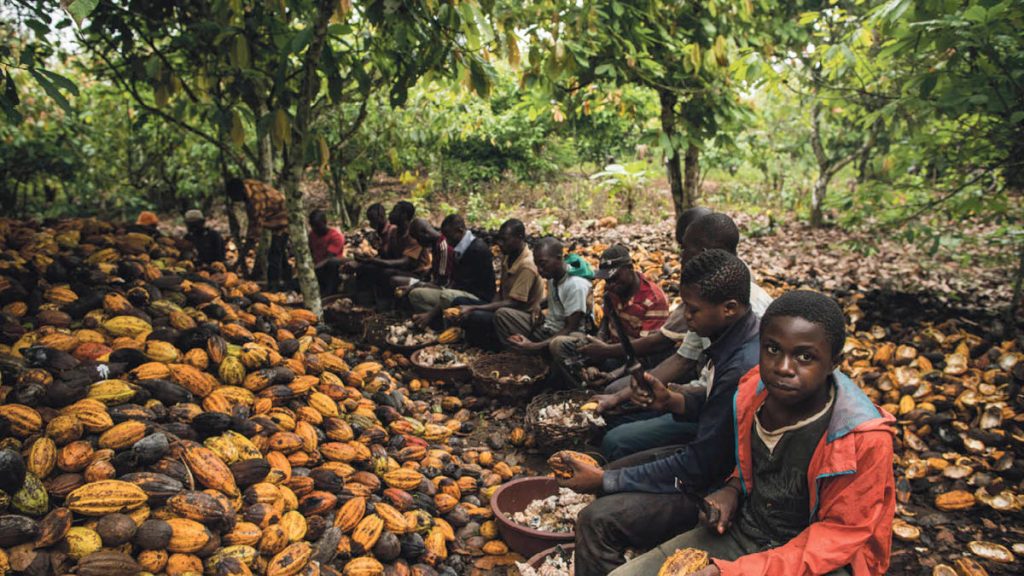
Western Africa is quite the climate for cacao beans, or cocoa, the main source for chocolate around the world. Ghana and the Ivory Coast account for almost 70% of the world’s cocoa and sell it to major chocolate companies like Hershey and Nestle. In recent years, it has come to the international community’s attention that these countries have widespread use of child labor, or in some cases, child slavery. This has prompted the industry to becoming increasingly secretive, making it harder for reporters, activists, and organizations to access these farms and document human rights violations connected to the worst forms of child labor, human trafficking, and slavery.
The growth of the chocolate industry over the years is directly proportional to the demand for cheap cocoa, and with this demand, cocoa farmers are earning as little as < $2 a day, falling below the poverty line. In order to keep their prices competitive, farm owners have resorted to child labor and exploitation, this way saving even more money on the job and exporting the same.
Children in Western Africa are surrounded by extreme poverty and because of this situation, the majority begin working at young ages in order to support their families. When approached by traffickers who claim the job pays well, children looking for work tend to accept and end up heinously exploited. Others are even “sold” to traffickers or farm owners by their relatives, most of them being oblivious to the precarious environment and lack of proper resources like food, habitable shelter, or education.
Some traffickers abduct these children from smaller, outlying villages in neighboring countries like Burkina Faso and Mali. Both of these countries have consistently ranked as some of the poorest in the world. Children who are abducted are then immediately transported to the cocoa farms in Ghana or the Ivory Coast, many going years without seeing their families, if they get to see them again. These children tend to fall between 12 and 16, however, reporters have witnessed children as young as 5 years old.
In some cases, the work these children are forced to complete is extremely dangerous. Typically, their workday begins at six AM and ends late in the evening. Some children use chainsaws to clear the forests, while others cut bean pods atop trees using machetes, both activities clearly violating international labor laws and a UN Convention on eliminating the worst forms of child labor. According to a former cocoa slave, Aly Diabete, the bean pods are placed into 100 pound sacks and dragged through the forest.

“Some of the bags were taller than me. It took two people to put the bag on my head. And when you didn’t hurry, you were beaten.”
Aly Diabete, former cocoa slave
Aside from the proximity to dangerous weapons, children are also exposed to agricultural chemicals used in the farms. Regions like Ivory Coast and Ghana constantly deal with massive insect populations and choose to meet them by spraying cacao pods with large amounts of industrial chemicals. In Ghana’s case specifically, children as young as 10 carry out this specific task without any protective gear on them.
Children are provided with the cheapest food available to farm owners, usually corn paste and bananas. Some children sleep on wooden planks in small, windowless buildings that have no access to clean water or proper hygiene, an absolute nightmare in the midst of a pandemic. In Ghana, 10% of child laborers do not go to school, and that percentage sadly rises to 40% in the Ivory Coast, a flagrant breach of the International Labor Organization’s Child Labor Standards.
Extreme cases like slavery have been accompanied by accounts of physical violence, including but not limited to being whipped for slow work or for attempting to escape. Reporters have even documented instances where both children and adults were locked in at night so they wouldn’t escape. Aly Diabate has said that the beatings became a part of their life, completely desensitized to violence and living in constant fear of more beatings.
“When people eat chocolate, they are eating my flesh.”
Aly Diabate
Donate to the Ivory Coast here.
Donate to Ghana here.
Sources:
Child labor and slavery in the chocolate industry. (n.d.). Retrieved February 16, 2021, from https://foodispower.org/human-labor-slavery/slavery-chocolate/
Al Jazeera. (2020, October 20). Child labour rising in Ghana and Ivory coast’s cocoa farms: Study. Retrieved February 16, 2021, from https://www.aljazeera.com/economy/2020/10/20/child-labour-rising-in-ghana-and-ivory-coasts-cocoa-farms
Child trafficking in Ghana. (n.d.). Retrieved February 16, 2021, from https://www.unodc.org/unodc/en/frontpage/child-trafficking-in-ghana.html
 Help Humans