
From new species being discovered, to Europe’s fight for gender equality, to successful small business owners, this is January’s edition of 5 Good News in 5 Minutes.
1. Major Asian nations cancel coal-powered projects
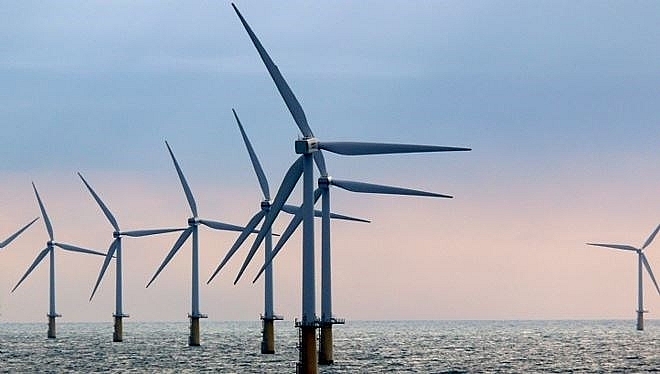
Indonesia, Bangladesh, the Philippines, and Vietnam have formally canceled almost 45 gigawatts of coal power project proposals. The diminishing coal industry had targeted the emerging markets for growth, however the pandemic and financing troubles took them by surprise and caused a 180º turn towards more cost-effective and environment-friendly alternatives.
2020 impacted the coal industry on a scale as big as the impacts health systems suffered, yet there seems to be no projection for a “v-shaped recovery”, according to a new analysis by Global Energy Monitor (GEM). In 2020, several banks in South Korea and Japan (both being the major Asian coal investors) announced new policies on coal power development. These regulations rendered 29 new plants useless in Bangladesh alone.
“We are reviewing how we can move from coal-based power plants. I am determined to accelerate the development of our country’s indigenous resources. We are also pushing for the transition from fossil fuel-based technology utilization to cleaner energy sources to ensure more sustainable growth for the country.”
Energy Secretary Alfonso G. Cusi of the Philippines
2. The Top 10 species discovered in 2020
In 2020, all sorts of species — ranging from plants, to snakes, to spiders, to monkeys — , were discovered around the world. Beginning with reptiles, a new pit viper by the name of Trimeresurus Salazar was discovered in India’s Arunachal Pradesh state and given the name of Salazar’s pit viper, an instant favorite for Harry Potter fans. An underground specialist in Vietnam found a species named Achalinus zugorum that apparently glows iridescently when in the sunlight.
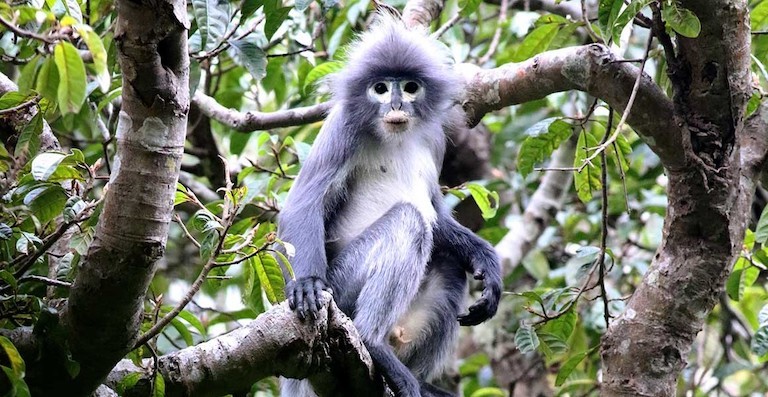
Moving on to primates, Myanmar found an astonishing four populations of Trachypithecus popa, a species that is thought to have only 260 individuals (classifying it as critically endangered); these type of discoveries are extremely rare. In Madagascar, a mouse lemur species named Microcebus Jonahi also emerged, going by Jonah’s mouse lemur. The lemur averages the size of a human fist and has reddish-brown fur with a white stripe down its nose. Also in Africa, scientists discovered a new evergreen shrub named Tiganophyton karasense, sharing a lot of traits with plants like broccoli and brussel sprouts.
In Scotland, three new mushrooms were found to facilitate the growth and health of pines in the forest. Back to Asia, Sri Lanka made the terrifying discovery of a four-inch scorpion whereas Iran came across the Joaquin Phoenix spider, black and white with red blotches on its body. Lastly, the ocean wasn’t excluded from these new discoveries. The first of these was what is believed to be the largest (and certainly longest) animal ever known to man. The animal was found in deep-sea Ningaloo and resembles a jellyfish in some ways. The second of these was a new species of beaked whale found 100 miles north of Mexico’s San Benito Islands, a species that had never been seen alive and was presumed endangered.
3. How small business owners have adapted to the pandemic
Technology has emerged as somewhat of a blessing for small business owners who have had to adapt to the pandemic and customers not shopping in person. Judging from the results of a recent poll, thirty-one percent of small business owners have said that embracing new forms of technology have helped them override the pandemic. Twenty-five percent also stated that the pandemic helped them speed up their transition to new technology.
While COVID-19’s effect on small businesses has been mostly negative, some owners have revealed that they are cautiously optimistic about the future thanks to their use of technology. Some also say that once business can resume as usual they expect the negative effects of the pandemic to be gone within the year. 7% went as far as to say the pandemic had a positive impact on their business overall.
“If there’s one lesson to be learned from the survey, it’s that many small businesses have faith in their ability to ride out the storm. But that’s only true if they’ll learn to think on their feet, and are willing to explore out-of-the-box solutions and the adoption of new technologies.”
Spokesperson from Melio, the company that commissioned the aforementioned survey.

4. Endangered whales previously in captivity find new home
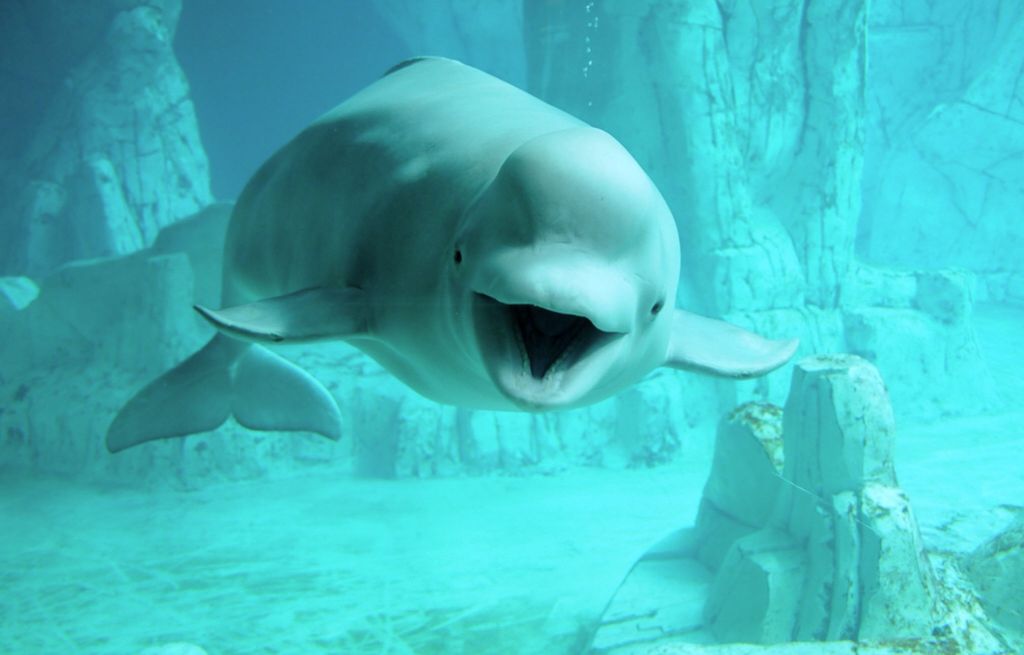
In Shanghai, China, two 12-year-old beluga whales spent several years in captivity to entertain people at an aquarium, however, they have now been moved to an open-water sanctuary in Iceland. The whales are around four meters long and weigh approximately 900kg each, so transporting them was no easy task.
The whales, both females known as Little White and Little Grey, were flown over 6,000 miles for 30+ hours in a large aircraft with containers from Changing Ocean World until they arrived to their new home, a sanctuary on Iceland’s Heimaey Island. This will be the first time they can appreciate open water since leaving a whale research center in Russia in 2011.
Andy Bool, head of the Sea Life Trust, has said that they are delighted the whales have safely reached their new home. Conservationists and environmental activists around the world are hoping that the Icelandic sanctuary turn into a model for giving a new home for 3,000 whales and dolphins that are currently trapped in traditional captive facilities, or are used for human entertainment at places like Sea World and other large aquariums.
5. Germany’s new push for gender equality
Germany has implanted a new national strategy dedicated to fight gender inequality, the first move of its kind in the country’s history. “Strong for the Future” seeks to put more women in leadership posts in politics, civil service, and business, and to lessen the gender pay gap.
For the past 14 years, Germany has been led by a globally admired female chancellor who has been described as the “most powerful woman in the world” by Forbes, yet it falls below Europe’s average for gender equality. One of the plan’s goals is to raise the number of women on executive boards by expanding the existing quota. This quota established a minimum 30% and applies to 105 companies, however with the plan, it will spread to 600 companies.
On average, women in Germany earn around 20% less than men do. This wage gap can lead to over a 50% pension gap in the future between women and men, according to Germany’s families minister Franziska Giffey. The plan has been described as a “milestone” for eradicating gender inequality in the long term.

Sources:
Liwanag, R. (2020, December 21). Good News Stories From Around the World That Will Brighten Your Day. Retrieved January 19, 2021, from https://www.readersdigest.ca/culture/good-news-stories-world/
-, G., By, -, & Good News Network. (2021, January 10). The Unique Ways in Which Small Business Owners Are Adapting to the Pandemic. Retrieved January 19, 2021, from https://www.goodnewsnetwork.org/ways-that-small-business-owners-are-adapting-to-the-pandemic/
-, A., By, -, & Corbley, A. (2021, January 16). 4 Major Asian Nations Cancel 80% of Planned Coal Power Projects After Fossil Fuel Market Crashes in 2020. Retrieved January 19, 2021, from https://www.goodnewsnetwork.org/emerging-asian-coal-markets-cancel-coal-power-projects/
-, A., By, -, & Corbley, A. (2021, January 12). Top 10 Species Discovered in 2020 Include a Harry Potter Snake and Desert-Dwelling Broccoli. Retrieved January 19, 2021, from https://www.goodnewsnetwork.org/top-10-species-discovered-in-2020/
 Help Humans